
You Are Injured. You Are Not Broken: The Physical and Emotional Recovery After an Accident
One moment can change everything.
A car accident can happen in seconds. But recovery doesn't happen nearly as quickly.
After the emergency room visits, imaging, doctor's appointments, and diagnoses, a person can be left dealing with something much bigger than the injuries written on their medical chart.
Pain. Fear. Fatigue. Changes in concentration or memory. A body that doesn't move or respond the way it did before.
And perhaps one of the hardest parts:
Everyone suddenly treating you like you're broken.
There is an important difference between respecting someone's injuries and teaching them, intentionally or unintentionally, to be afraid of their own body.

Recovery Is More Than Healing Tissue
When we talk about recovering from an accident, we tend to focus on the physical injuries.
What's herniated?
What's inflamed?
Where does it hurt?
How much range of motion has been lost?
Those things matter. But they aren't the entire story.
A traumatic brain injury can affect much more than someone's head. According to the Centers for Disease Control and Prevention (CDC), traumatic brain injuries can cause physical, cognitive, emotional, and sleep-related symptoms.
That can mean changes in concentration, memory, processing, emotions, sleep, headaches, balance, and energy.

Spinal injuries bring another set of challenges. A herniated disc, for example, may cause pain, numbness, tingling, or weakness depending on the location and nerves involved. The Mayo Clinic explains the symptoms and causes of herniated discs here.
Suddenly, things that once required no thought can require planning.
Working.
Driving.
Cleaning the house.
Exercising.
Taking care of your family.
Even getting through an ordinary day.
But there's another injury that doesn't appear on an MRI:
The loss of confidence in your own body.
"Be Careful" Can Eventually Become "I Can't"
After someone has been seriously injured, the people who love them naturally want to protect them.
Don't lift that.
You shouldn't do that.
Sit down. I'll get it.
Are you sure you can handle that?
Sometimes those precautions are absolutely necessary. Restrictions from physicians, physical therapists, occupational therapists, and other members of someone's medical team need to be respected.
But there is a difference between supporting someone's limitations while they heal and beginning to define that person by those limitations.
Imagine hearing, day after day, all the things you shouldn't or can't do.
Eventually, "Be careful" can start sounding like:
"Your body can't be trusted."
And "Let me do that for you" can start feeling like:
"You're no longer capable."
That matters.
The Brain Injury Association of America provides resources not only for the physical consequences of brain injury but also for the emotional, behavioral, social, and everyday challenges that can follow.
Sometimes a person recovering from an accident doesn't need everyone around them to constantly remind them of what they've lost.
Sometimes they need someone to remind them of what is still there.
The Mental Recovery Is Real
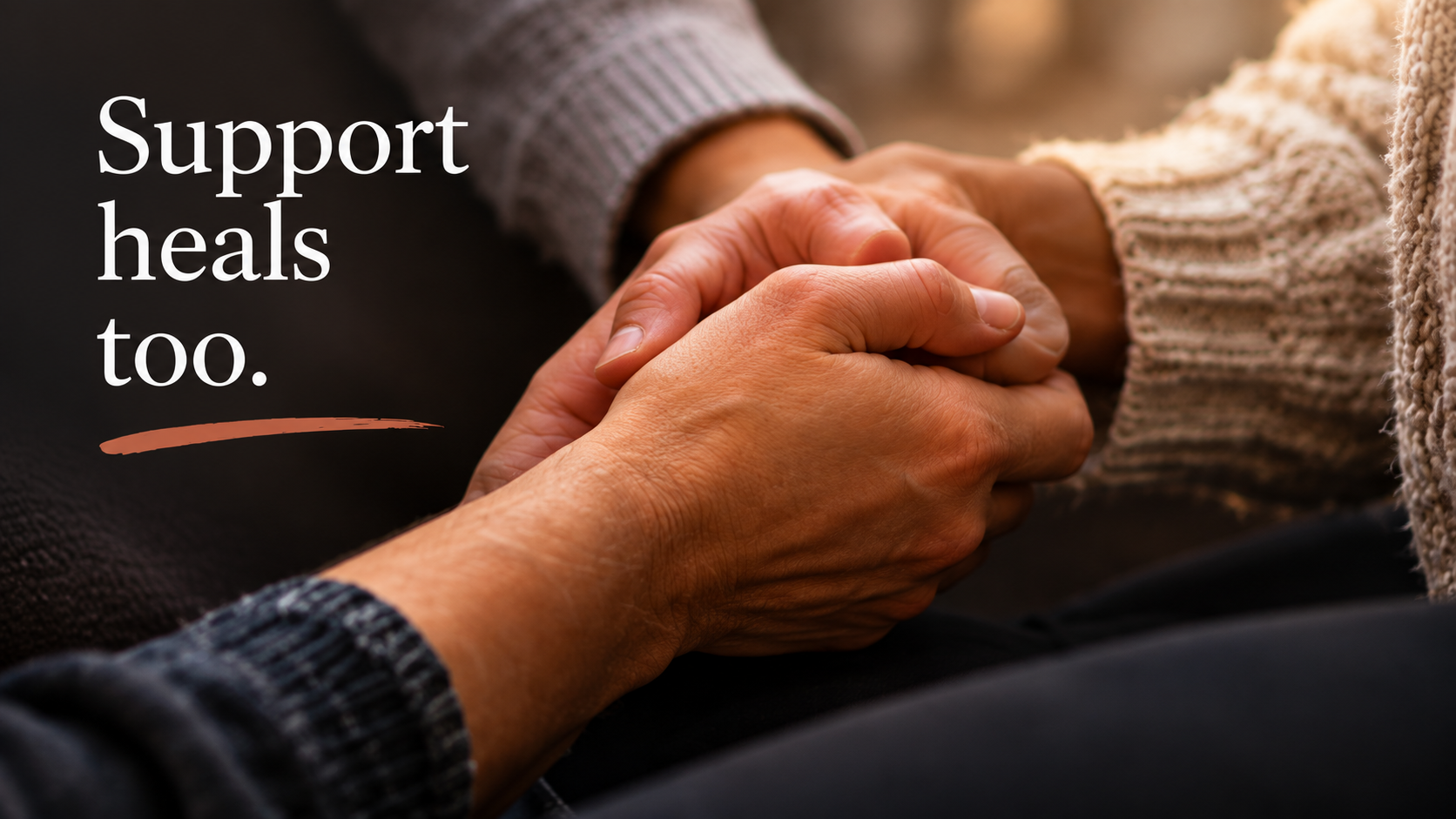
There's something people don't always understand about traumatic injury:
You don't simply return to the person you were the day before the accident.
You may grieve that person for a while.
You may become frustrated because your mind wants to do something your body isn't ready to do yet.
You may wonder:
Will I ever feel normal again?
Can I go back to my job?
Can I trust myself to drive?
Why am I exhausted from something that used to be easy?
Why am I so emotional?
Why can't I think the way I used to?
These experiences shouldn't automatically be dismissed as someone being dramatic or negative.
The CDC notes that TBI symptoms can affect how a person feels, thinks, learns, acts, and sleeps.
The mental and emotional parts of recovery deserve attention just as the physical injuries do.
That doesn't mean someone is weak.
And it doesn't mean their recovery has failed.
It means their brain and body have been through something significant.
Healing Doesn't Have a Deadline
One of the most frustrating questions after an injury can be:
"When will you be back to normal?"
Sometimes there isn't a good answer.
Recovery isn't always linear.
There may be a great day followed by a terrible one.
Someone may tolerate an activity perfectly one week and struggle with it the next.
They may make enormous progress that nobody else notices.
And different injuries recover differently.
For moderate and severe traumatic brain injuries, the CDC explains that recovery and long-term outcomes can vary from person to person.
That's important because healing shouldn't always be measured against someone else's timeline.
Instead of constantly asking:
"When are you going to be back to the way you were?"
Maybe a better question is:
"What's the next thing you can safely reclaim?"
There Is a Difference Between Pushing and Empowering
Supporting recovery doesn't mean telling someone to ignore pain.
It doesn't mean encouraging someone to push through neurological symptoms.
It doesn't mean pretending the injury isn't serious.
And it certainly doesn't mean overriding restrictions from their medical providers.
It means recognizing that someone can be:
Injured and capable at the same time.
Maybe today they can walk five minutes.
Maybe eventually it's ten.
Maybe they're returning to work with restrictions.
Maybe they're learning what their current limits are.
Maybe they're rebuilding strength.
Maybe they're learning how to ask for help without feeling helpless.
Or maybe they're simply learning that one bad day doesn't erase months of progress.
Recovery doesn't necessarily mean proving that nothing happened.
Sometimes it means discovering what is possible now and slowly expanding what becomes possible next.
The Body Needs Safety—Not Fear
At Phoenix Body & Mind, we talk a lot about listening to the body.
After an accident, that conversation becomes even more important.
Pain matters.
Neurological symptoms matter.
Medical diagnoses matter.
Restrictions matter.

But fear matters too.
A body recovering from trauma doesn't need to be treated recklessly.
It also doesn't need everyone around it constantly reinforcing the idea that it is permanently fragile.
There is a middle ground:
Respect the injury.
Follow medical guidance.
Listen to symptoms.
Build gradually.
Celebrate progress.
Allow setbacks.
Keep adapting.
And perhaps most importantly:
See the person—not just the injury.
Because someone recovering from an accident is still a parent.
A spouse.
A friend.
A coworker.
A professional.
A person with goals, opinions, humor, talents, responsibilities, and plans for their future.
An accident may have changed what their body needs right now.
It didn't erase who they are.
You Are Not Your Diagnosis
There may be scars.
There may be limitations.
There may be things that take longer than anyone expected.
There may even be things that never look exactly the way they did before.
But healing doesn't necessarily have to mean becoming exactly who you were before the accident.
Sometimes recovery is also about discovering who you are after it.
Your body isn't simply a list of diagnoses on a medical chart.
It's communicating.
Learning to understand those signals—while receiving appropriate medical care and without allowing fear to define your entire future—can be part of healing.
You can be injured without being broken.
And sometimes one of the greatest gifts we can give someone who is recovering is to stop treating them like a damaged version of who they used to be and start supporting the person they are becoming.

Resources & Further Reading
Centers for Disease Control and Prevention
Signs and Symptoms of Traumatic Brain Injury
Centers for Disease Control and Prevention
About Moderate and Severe Traumatic Brain Injury
Mayo Clinic
Herniated Disk: Symptoms and Causes
Brain Injury Association of America
Brain Injury Information and Resources
Phoenix Body & Mind
Clinical Massage & Corrective Therapy | DeLand, Florida
The body doesn't lie, but we can teach it a new truth.
